
Search the North Carolina Residents Directory
North Carolina has no single public roll of everyone who lives in the state. A resident trail is split among county offices, state services, courts, and local libraries. Begin with the county tied to the address, event, or case. The North Carolina Association of Registers of Deeds (NCARD) directory helps identify the county deed office when the county is not clear. The county assessor and GIS system can then connect a physical address to a parcel and a deed reference. That match is evidence of an owner or recorded party, not a full list of people in the home.
A name search works best when it includes one more detail, such as county, approximate year, middle initial, spouse, or parcel. Each source answers a narrower question. A voter profile may confirm registration status and district; a public court docket may show a case and its events; a certificate request may confirm a vital event if the requester meets the rules. If the task shifts from finding one person to following a street, use the North Carolina street directory workflow.
- Set the county and municipality from the known address or record.
- Check the county parcel search, then note the parcel ID and deed reference.
- Use the voter lookup or court search only for the question each public profile answers.
- Ask the right custodian for a certificate, paper file, image, or older index when online coverage ends.
- Compare a second independent detail before treating two records as one person.
Which North Carolina Offices Keep Resident Records
North Carolina is a statewide location made up of 100 counties, and each county has its own Register of Deeds and Clerk of Superior Court. County assessors and GIS offices also run local property systems. NCARD is a directory to those offices, not a deed index covering every county. The State Archives holds historic public records and microfilm, while NC Vital Records and the State Board of Elections manage distinct state services. The office list below is a starting point; land, court, and permit requests still follow the county or municipality that holds the record.
For an old index or a public file that is not online, contact the custodian named for the record series. The NCARD directory routes land-record questions to the right Register of Deeds. Its service page also lists county-by-county eRecording, NCDAVE, and property-fraud alert participation.
The NCARD county selector shows where each Register of Deeds office sits in the statewide system.
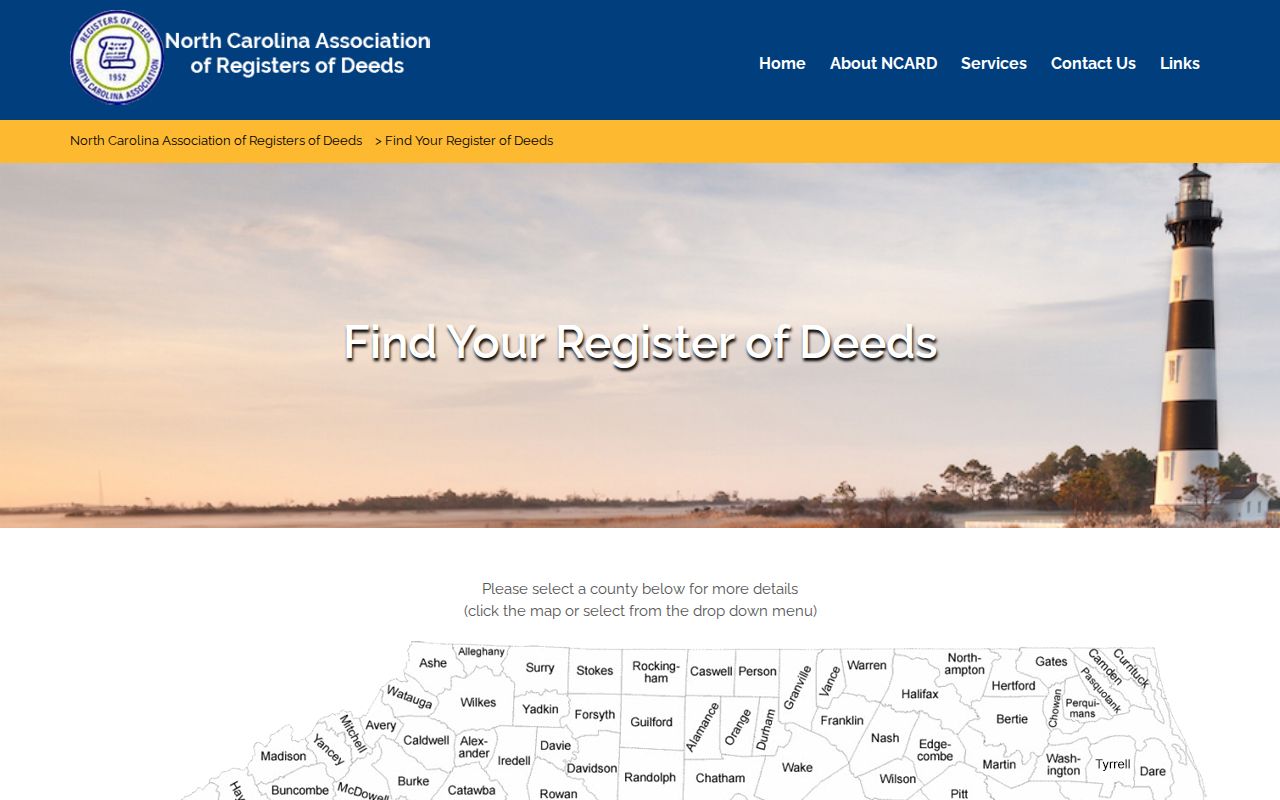
Use the county result to reach the local office and its own deed search; the selector does not replace that local index.
State Archives of North Carolina
109 E. Jones St.
Raleigh, NC 27601
919-814-6840
Archives collections
North Carolina Vital Records
225 N. McDowell St.
Raleigh, NC 27603
919-733-3000
Certificate orders and research
North Carolina State Board of Elections
P.O. Box 27255
Raleigh, NC 27611-7255
919-814-0700
Board information
North Carolina Resident Parcels Span 100 Counties
NC OneMap provides a free statewide parcel layer and searchable data portal. All 100 counties participate in North Carolina’s standardized parcel work, which gives a researcher a shared starting point even though local tax cards and search tools differ. The state parcel standard can include site and mailing addresses, owner name, parcel ID, assessed land and building values, deed book and page, deed date, acreage, subdivision, parcel use, and sale date. A county assessor may add a building sketch, exemptions, sales history, or other local fields.
Start with the site address or owner name when the local tool offers it. Record the parcel ID, then follow the county assessor or deed link for the source record. Mailing address is where a tax notice goes; it can differ from the parcel’s physical location. A parcel card can point to ownership evidence, but it does not prove who else lives there or where the named owner is now.
- Situs address
- The physical address tied to a parcel.
- Mailing address
- The delivery address for tax notices, which may be elsewhere.
- Parcel ID
- The county’s unique property key used to bridge maps, tax cards, and deeds.
North Carolina Voter Lookup Search Fields
The NCSBE Voter Search is a named lookup, not an open street-by-street voter list. A current profile may show status, county, precinct, polling place, districts, sample ballot when available, absentee-ballot details when available, and voter history. The State Board’s voter-profile page says first and last name are required; year of birth and county can narrow a match. Ballot choices are not public, and protected voter information is not displayed.
| Search control | Type | Required | Use |
|---|---|---|---|
| First name | Text | Yes | Enter the voter’s first name. |
| Middle initial | Text | No | Optional detail for similar names. |
| Last name | Text | Yes | Enter the voter’s surname. |
| Year of birth | Select | No | Optional narrowing field. |
| County | Select | No | Choose one county when known. |
| Voter status | Checkboxes | At least one | Choose Registered or Removed or Denied. |
A voter profile is one clue, not proof of household membership. The public page does not state a single online start year for historic voter data. For a correction, contact the county Board of Elections. A request for the full voter file is separate; the reviewed state pages did not give one current fee or delivery format, so ask the State Board or county board for its present rules.
North Carolina Court Search Has Limits
The North Carolina eCourts Portal is free for public case search, but it is not the official court record. Its coverage follows the statewide county rollout, which began with pilot courts in 2023 and reached the final scheduled track on October 13, 2025. A public result may show party names, case number, county, type, filing date, docket events, hearing dates, and a disposition. Sealed, juvenile, restricted family, and other confidential material may not appear.
North Carolina’s useful fallback is an in-person public terminal at a Clerk of Superior Court office. A terminal in any county can search the statewide court system, while the paper file stays with the clerk in the filing county. Ask that office for a certified or paper copy when needed. Large files that fail to open online may need to be split by the clerk. A docket hit is a lead to a file, not a complete statement about the person named.
North Carolina Vital Records Follow Event County
NC Vital Records keeps statewide copies within stated year ranges, but it does not offer a free public certificate search. The right local office depends on the event: a Register of Deeds handles county birth, death, and marriage copies as allowed; the Clerk of Superior Court handles divorce files and judgments in the filing county. A death certificate follows the county where the death occurred, not always the person’s home county. State holdings begin in 1913 for births, 1930 for deaths, 1962 for marriages, 1958 for divorces, and 2001 for fetal-death reports. Earlier births and marriages route through the county Register of Deeds; pre-1930 deaths go to the State Archives; earlier divorce files go to the filing-county Clerk.
Order through the official certificate workflow online, by phone, mail, or appointment, or use a county office where it issues that record. The state search costs $24 for a three-year period and includes one copy if found; additional copies and remote processing can add fees, as shown on the current fee page. Certified copies are limited by N.C. Gen. Stat. §130A-93(c), and applicants need identity and eligibility proof. An uncertified copy can be used for information when the request includes enough detail and the fee.
Current North Carolina Resident Directory Sources
North Carolina’s resident sources answer different questions. A parcel card points to an owner, the voter search checks one named registration profile, and court or deed records cover people named in a filed case or recorded instrument. None is a census of current occupants. County coverage, online depth, image fees, and search controls vary, so keep the office and date with each result.
| Source | What a result can show | Keeper | Access route |
|---|---|---|---|
| Parcel and tax roll | Owner, parcel, value, situs and mailing fields | County assessor or GIS office | County portal, counter, or NC OneMap starting layer |
| Voter profile | Named voter status, precinct, districts, and history | State and county election boards | Free NCSBE name search; full-file route is separate |
| Recorded-document index | Grantor, grantee, instrument, date, and land description | County Register of Deeds | NCARD routes to a local index; images and copies vary |
| Public court case | Party, case type, events, and public documents | Judicial Branch and county clerk | eCourts search, public terminal, then filing-county file |
| Unclaimed property | Possible name or address link to reported property | NC State Treasurer | Free NCCASH search; claim proof is required |
| Permit or code case | Address, applicant, owner, activity, and dates when public | City or county office | Local portal or a narrow Chapter 132 request |
Use a county assessor when the starting point is a parcel, the State Board when the question is voter status, and the filing county when an official case copy is needed. A record can establish a name tied to an event or property without showing who lives there now. State and federal privacy laws also close some voter, vital, juvenile, adoption, health, and driver records.
North Carolina’s paid data-broker reports work differently from a request to the custodian. A compiled report may mix old public extracts with other data, merge two people with similar names, or omit someone whose records are protected. A paid result can still need checking against the office that made or holds the record.
| Source type | What it can establish | Next step |
|---|---|---|
| Official county or state record | A specific parcel, voter profile, case entry, deed, or certificate held by a named custodian. | Search online or ask the office about paper copies, certification, and fees. |
| Commercial data-broker report | A compiled lead that may be stale, mismatched, or incomplete. | Use the record office to verify the source facts. |
North Carolina Unclaimed-Property Search Is Free
The State Treasurer’s NCCASH site links to its name-search tool, where a person can check for reported property tied to a name or address. The database is updated daily. A possible match is only a starting point: the claim process asks for proof, and the state warns that claims often take about 90 days or longer when volume is high. Use the state’s own site and claim path rather than paying someone who promises quick access to the same name search.
North Carolina also has a county-specific deed-fraud alert service listed through NCARD. Its service page describes NCDAVE and fraud notifications, but enrollment depends on the county. A property notice is meant to flag a filing; it does not prove fraud by itself. Verify a suspicious letter or fee with the Register of Deeds using the contact shown in the official NCARD directory. The NCARD services page groups its recording, NCDAVE, and fraud-alert routes for county offices.
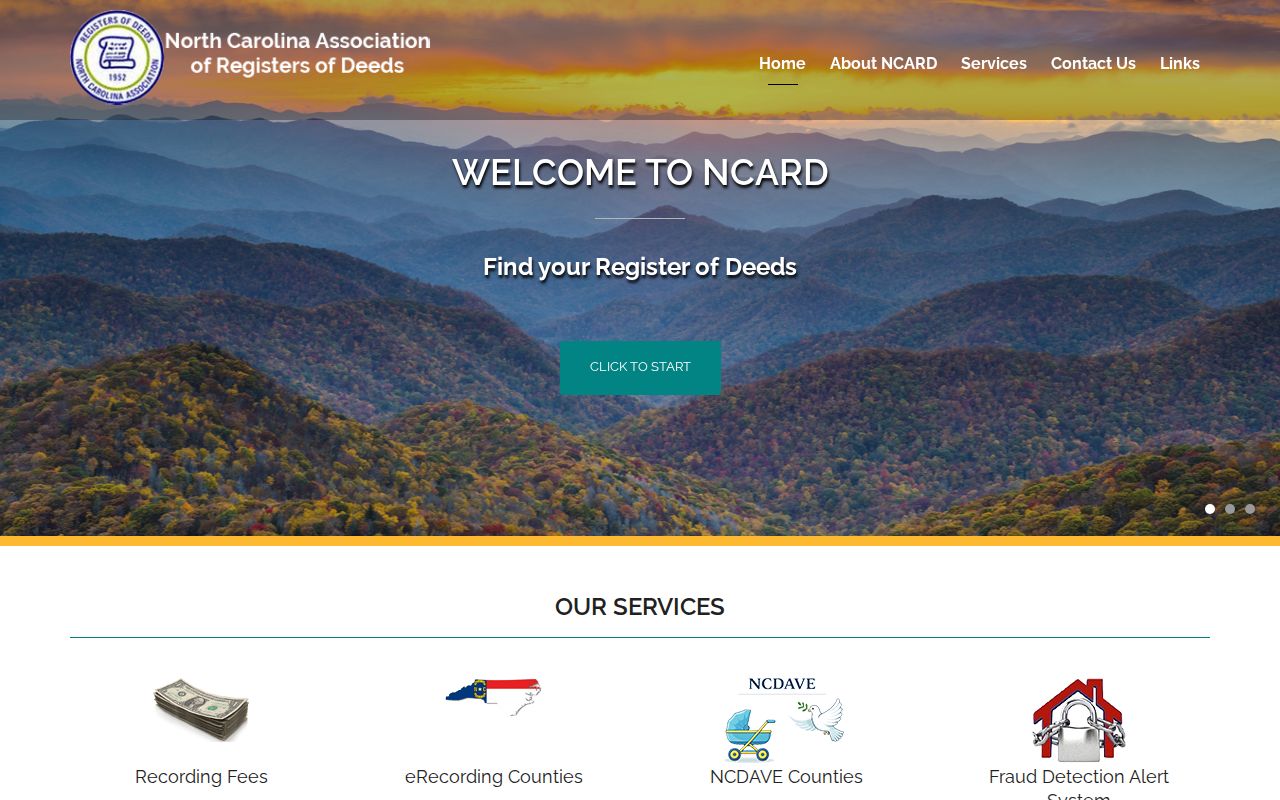
Check a county profile to learn which of those services it offers before acting on a notice.
North Carolina Public-Records Requests Name the Custodian
The North Carolina Public Records Act, N.C. Gen. Stat. Chapter 132, defines public records in §132-1 and sets inspection and copy duties in §132-6. Any person may ask to inspect or copy a public record unless a state or federal law makes it confidential. A requester does not have to give a reason. The custodian must provide access as promptly as possible, and a lawful copy fee may apply; Chapter 132 does not set one response deadline for every office.
When a search fails online, name the office, person or parcel, record series, date range, and format in a written request. Ask whether the material is held there, at an archive, or by a different county office. The Registers of Deeds schedule at the State Archives explains retention and public-record routing, while the Archives and local libraries can help with older indexes and microfilm.
Use public records for lawful personal research. Do not use an address or record to stalk, harass, threaten, or expose protected details about a person.
North Carolina ZIP Labels Cross Local Lines
A North Carolina postal city, municipality, county, tax district, and physical parcel do not always match. A mailing city can name a nearby town while the address lies outside its limits; one city can use several ZIP Codes; and one ZIP can cross a city or county line. USPS assigns delivery geography, not legal land boundaries. Use the USPS address lookup to check the current ZIP, then use county GIS layers to identify the parcel and the offices with jurisdiction.
Keep three address fields separate: situs is the parcel’s physical location, mailing is where tax notices go, and the deed’s legal description identifies the land. A ZIP filter in a county tax system may find records by the database’s mailing or situs ZIP, not every person who receives mail there. For an older address, compare a plat, road-naming record, or map before carrying the number forward. Wilmington and New Hanover County use a local directional grid based on the Cape Fear River and Market Street; that example should not be applied to other parts of North Carolina.
North Carolina State Archives Preserve Local Records
North Carolina’s record history extends well before web search. The State Archives was established in 1903 and reports holdings of more than 50,000 linear feet, including records created by state, county, and municipal offices, as well as maps, newspapers, military files, and family and organization papers. This is useful when a modern portal begins too late or a local record stayed on paper. Original deed and will books usually remain with county offices, while the Archives often has indexes or microfilm.
The State Archives collections and North Carolina Digital Collections include tax lists, voter materials, estate records, naturalization papers, maps, and family records. Collection dates and digital access differ by item. The Government and Heritage Library’s Tracking North Carolina Ancestors shelf guide points to wills, grants, voter registrations, newspapers, military records, and other family-history sources. Ask for the county, office, and record series rather than expecting one statewide file for a name.
Historical North Carolina Directories Have Local Runs
North Carolina does not have one statewide city-directory collection or an official year table for every town. Local libraries, university special collections, and regional archives hold different runs, including Polk, telephone, and other city or business directories. The State Library and Archives offer a statewide starting point, and DigitalNC adds digitized newspapers, yearbooks, maps, and local material. Ask a librarian to check the exact town and year in the catalog; a neighboring city’s volume may not cover the same place.
An annual directory can tie a name to a city address, occupation, spouse, or business, while a reverse directory starts with a street address. Publishers used abbreviations and owner or renter marks differently, so read each volume’s key. A directory entry is not a complete household list. For the collection map, sample fields, and year-by-year tracing method, use the North Carolina city directory page.